Javier Sánchez’s Case Study in Architectural Rigor: Blending Brutalist Aesthetics and Professional Performance in Mexico City.
Amidst the vibrant complexities of Polanco, Javier Sánchez’s manifesto-house interweaves exposed concrete and zenithal light, centering the scene on the rigorous stainless steel of Arclinea’s Italia kitchen: a material dialogue that redefines family intimacy in the heart of Mexico City.
In the contemporary architectural landscape, a designer’s private residence often assumes the role of a programmatic manifesto: a spatial laboratory where urban theories, material sensibilities, and philosophies of dwelling are distilled into their purest form. Galileo 105, the home of architect Javier Sánchez in the heart of Polanco, Mexico City, is no exception. This project transcends the simple definition of a single-family dwelling to become a case study on functional stratification, the honest use of materials, and the sanctity of communal space.
At the core of this architectural narrative lies the Italia kitchen by Arclinea, designed by Antonio Citterio. It is not merely a piece of furniture, but the gravitational fulcrum around which the entire family dynamic revolves. The choice of this system, characterized by brushed stainless steel and a near-surgical precision, reflects a vision of dwelling that prioritizes performance, hygiene, and sociality over mere decoration.

Polanco: Density and Osmosis
The setting is Polanco, historically and culturally one of Mexico City’s most vibrant and complex districts. Born in the 1940s as a residential neighborhood defined by California Colonial architecture and Art Deco influences, the district inherited a dense urban fabric of large palaces and luxurious buildings. Today, Polanco is the stage for a dynamic tension between its historic heritage and a cosmopolitan vocation: here, high finance, the luxury boutiques of Avenida Presidente Masaryk, and avant-garde gastronomy coexist with the need for domestic intimacy.
Its strategic location, adjacent to the Bosque de Chapultepec green lung and intersected by crucial thoroughfares like Reforma, makes the area one of the city’s most coveted nodes. In this context of hyper-density and continuous flow, the design challenge was to create a sanctuary that acts as a selective filter against the city.
The Poetics of Concrete
Completed in 2017, the residence bears the signature of Javier Sánchez, a pivotal figure in Mexican architectural renewal. Founder of JSa (Javier Sánchez Arquitectura) in 1996, Sánchez has transformed his studio into one of the most authoritative international references, addressing the theme of dwelling in urban complexity with a radical interpretation. With a portfolio boasting over 100 international awards and mentions, JSa’s practice is based on the concept of urban acupuncture: specific, localized interventions that, while operating on a local scale, regenerate the surrounding fabric, triggering positive social dynamics.
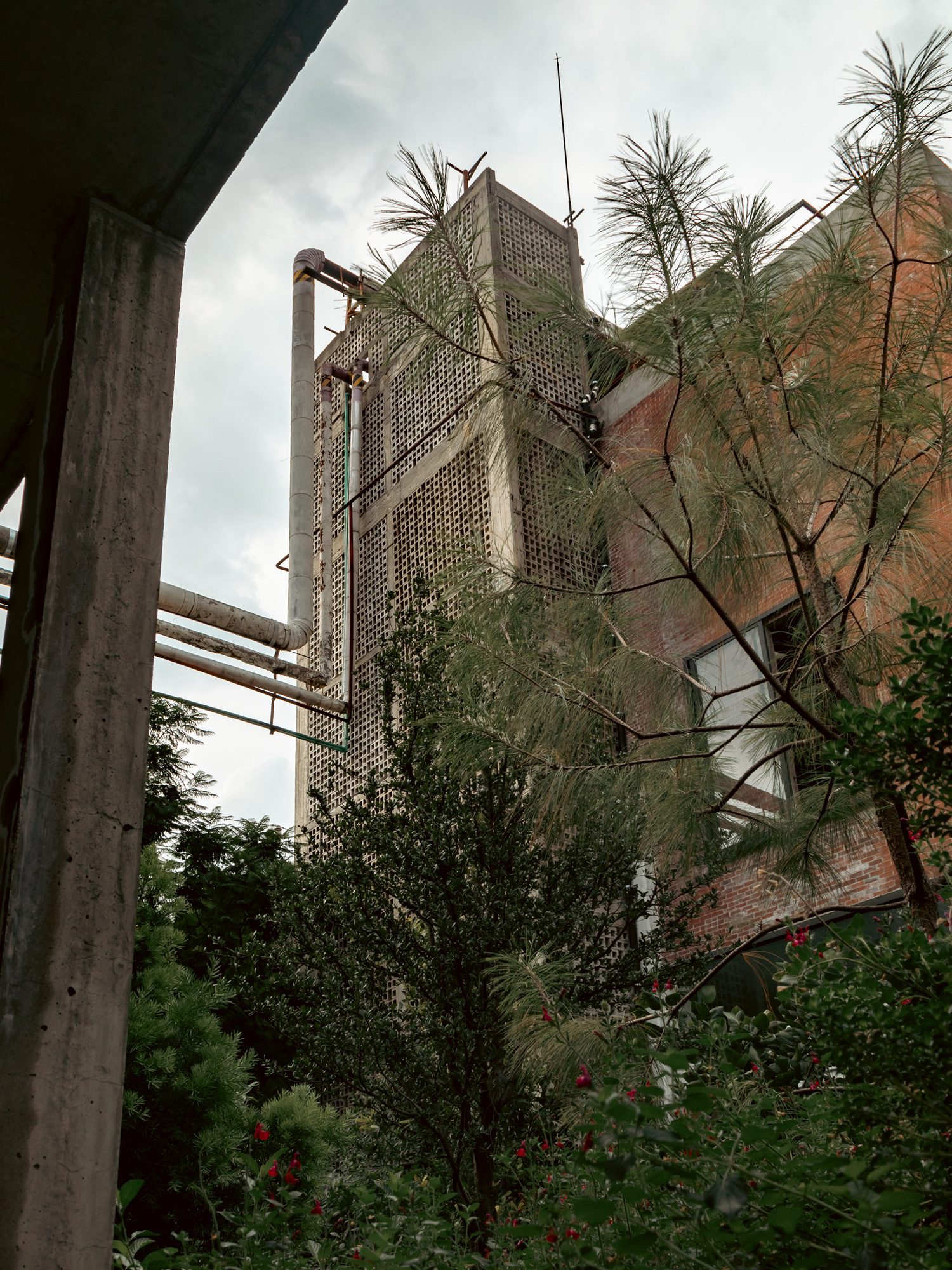
In Galileo 105, this acupuncture is internalized. The building refuses to dominate the context with loud, iconic gestures, preferring to integrate with an honest sobriety. It is an intervention of replacement and integration within a consolidated fabric, which responds to Polanco’s density not by hermetically sealing itself off, but by organizing life vertically and creating internal micro-climates that allow the city to be perceived without being overwhelmed.
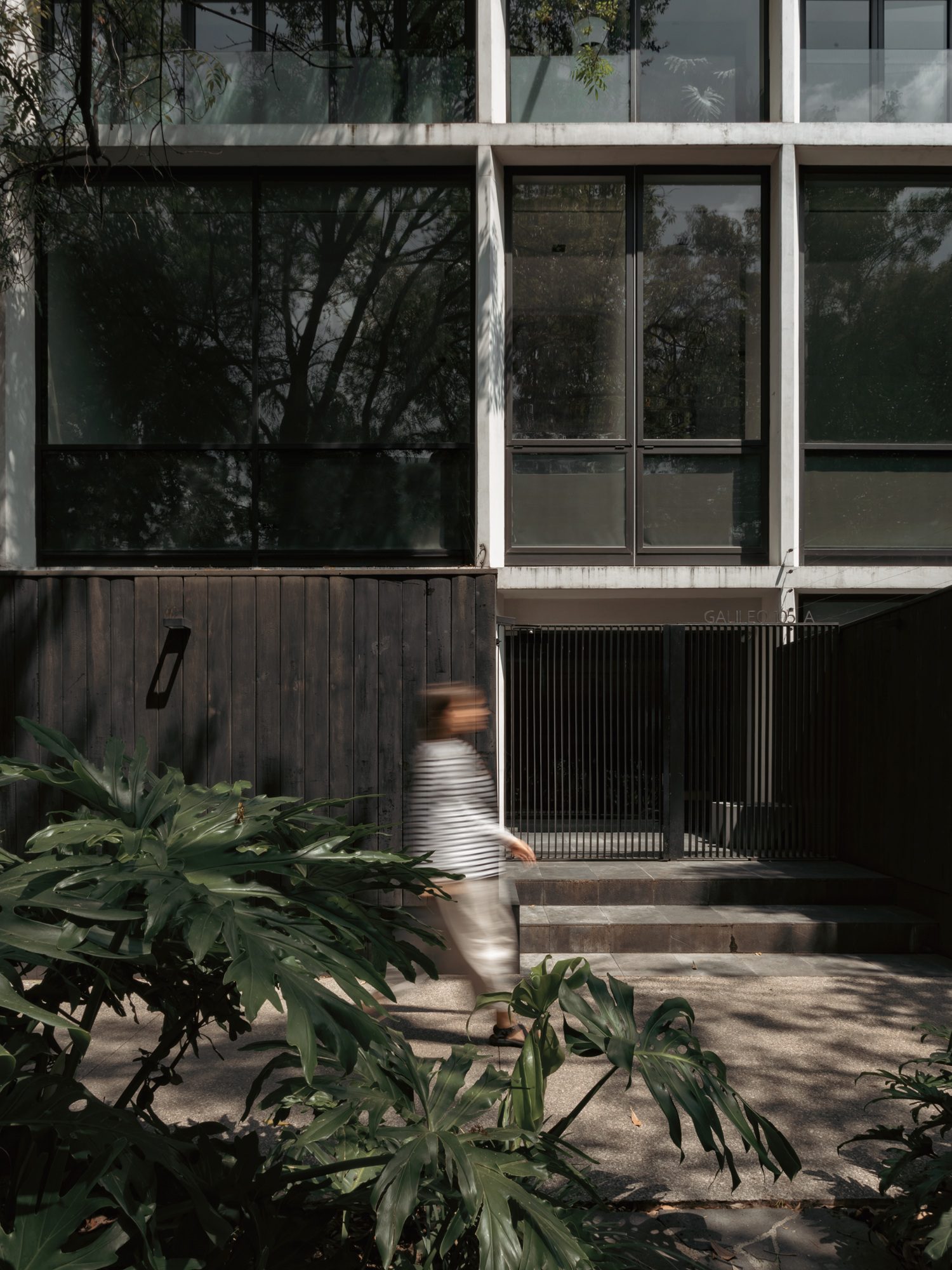
The osmotic relationship between the building and the street is mediated by a façade that reflects the Brutalist aesthetic dear to Sánchez. The use of exposed concrete transcends a stylistic choice to meet precise needs for thermal mass and acoustic insulation. However, this protective barrier is punctuated by large glazed surfaces and skylights that flood the interiors with natural light, yielding the atmosphere of a luminous greenhouse. A dialectical approach—closure towards chaos, openness towards light—defines the stylistic signature of the urban insertion.
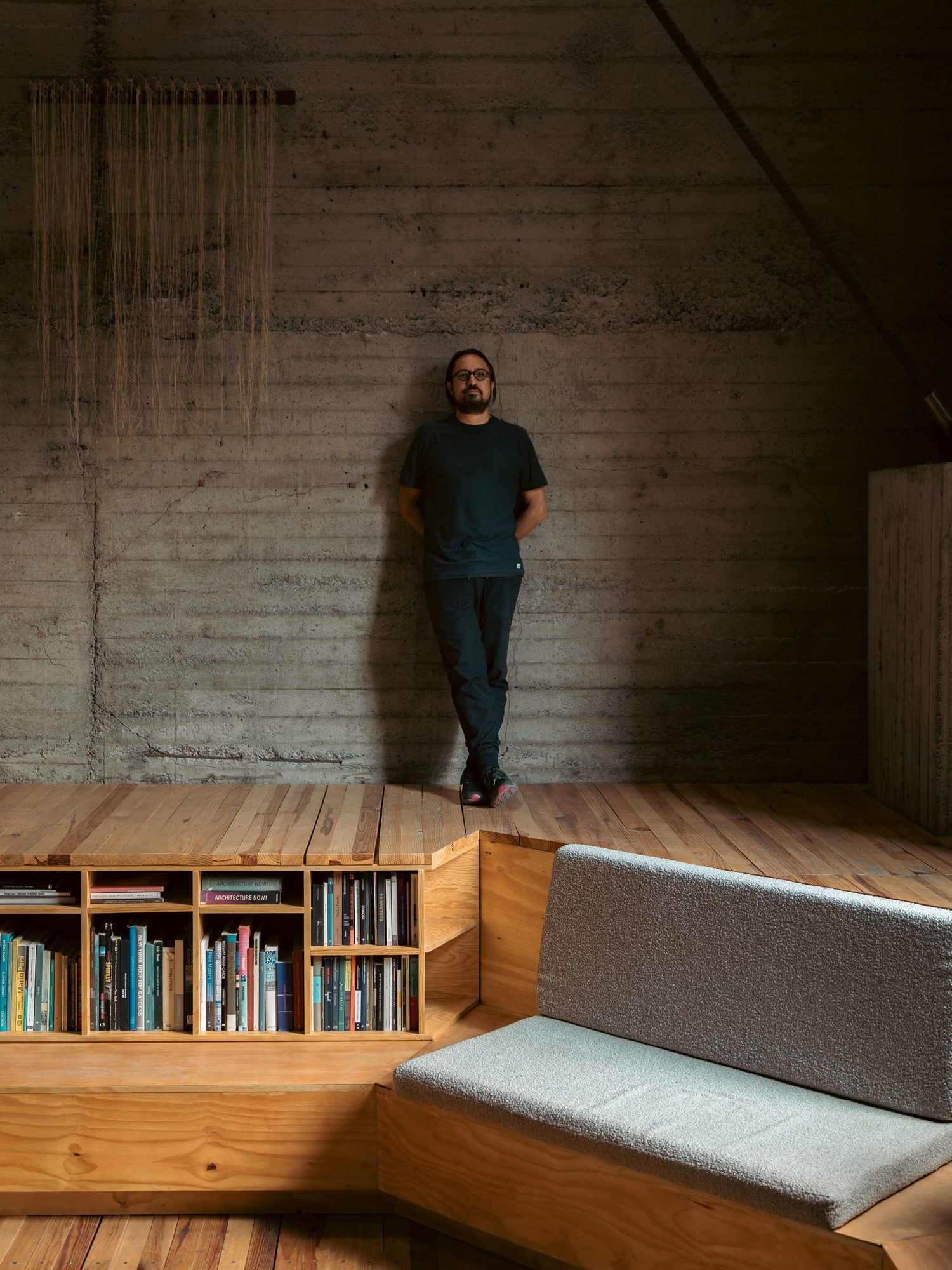
The design goal was ambitious: to create a home where every family member could live, work, and study independently, yet share meaningful moments. This sociological need dictated a rigorous organization in section, finding its synthesis on the main floor. “The most important floor of the whole house is the day zone, with the living room, kitchen, and dining room as protagonists: it is in these spaces that family life unfolds,” Sánchez states. It is here that the tectonic identity of the project reaches its fullness, in a close dialogue between the gravity of the concrete and the organic warmth of the wood. JSa’s Brutalism proves to be anything but cold; it is a tactile, atmospheric, and profoundly humanist Brutalism.
The Material Counterpoint
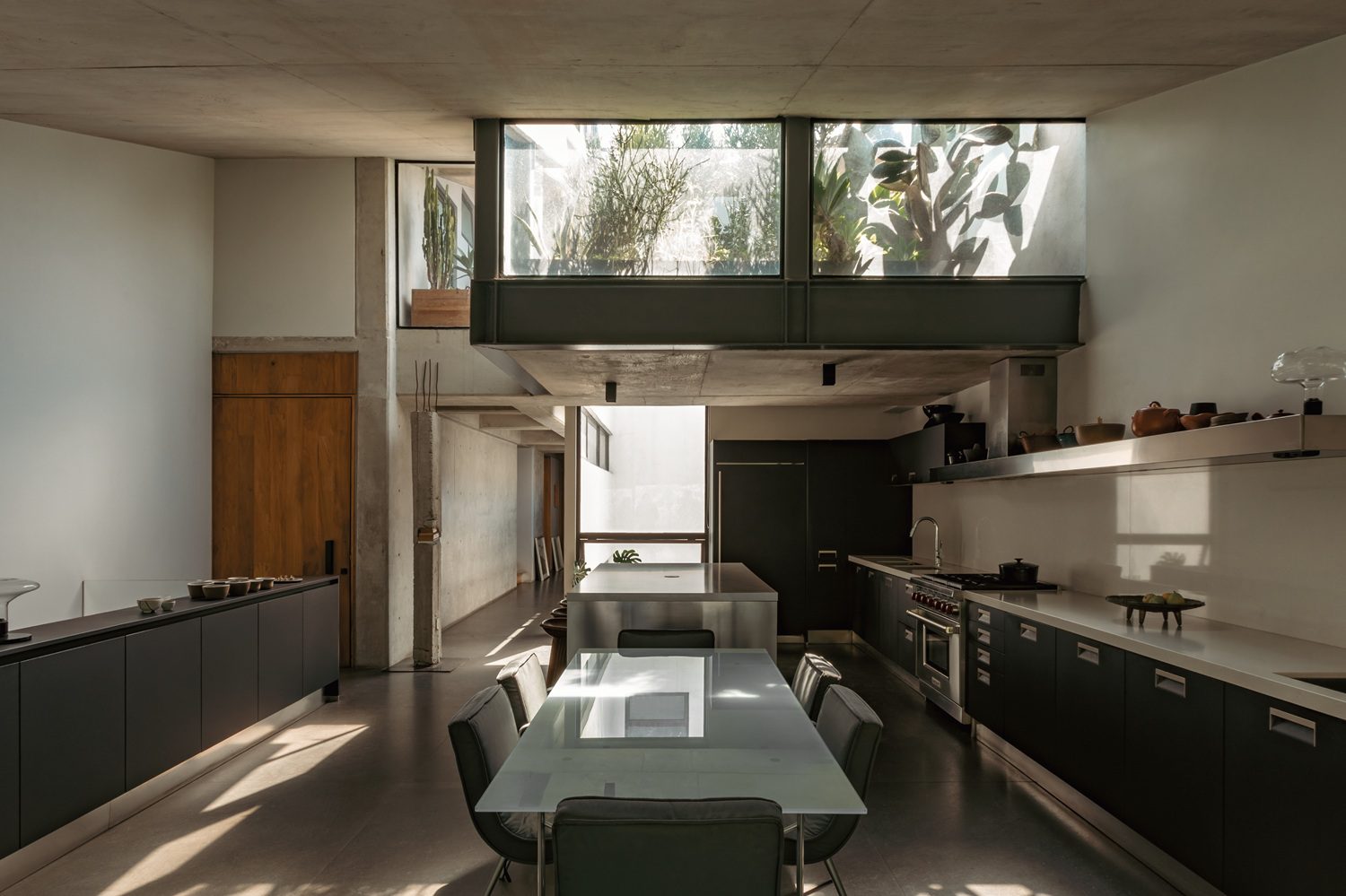
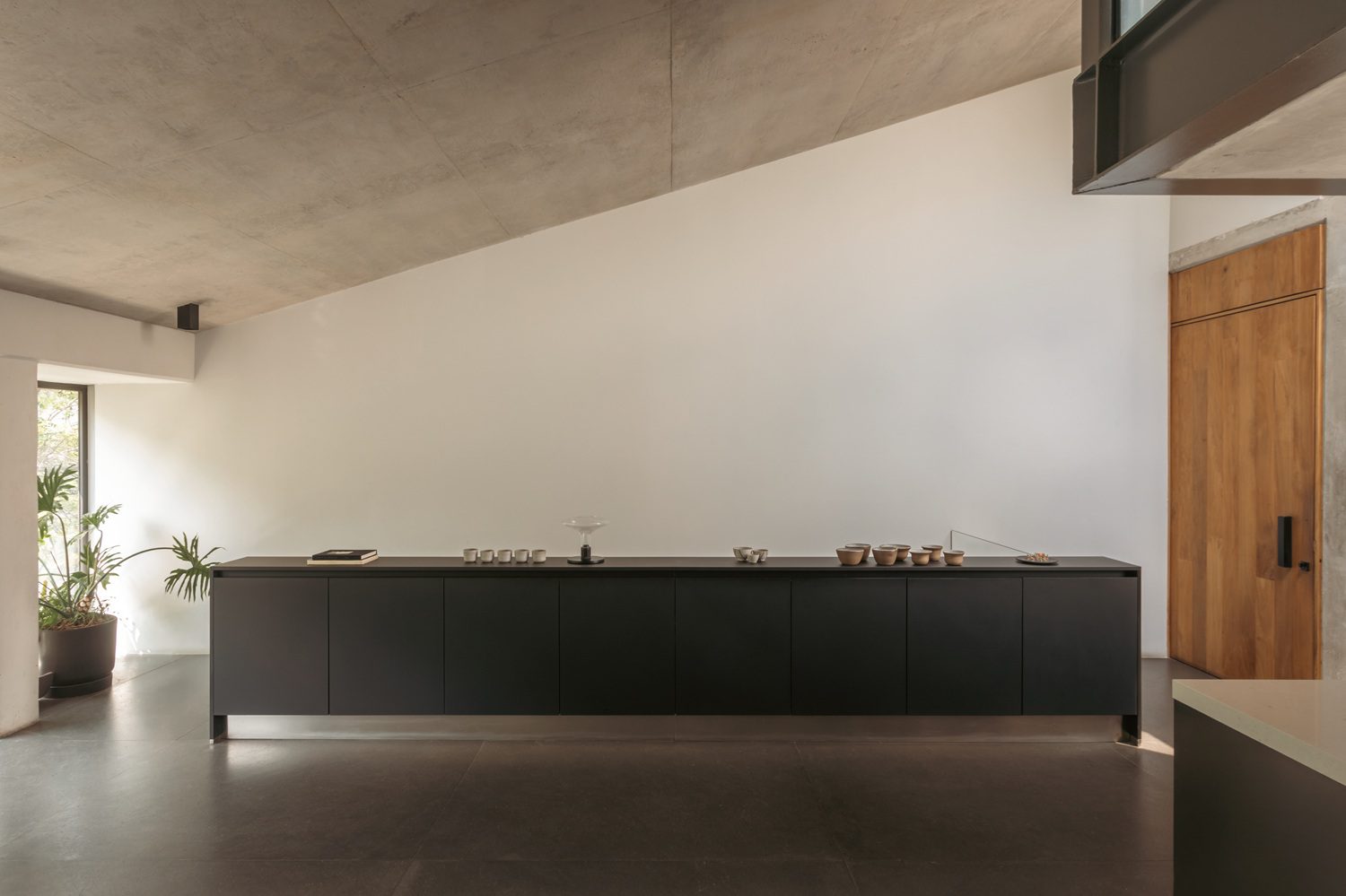
Spatial rigor is articulated by pristine vertical wings that, soaring upwards, enhance the double-height and diffuse the zenithal light. In this volume of light, the purity of white acts as a silent counterpoint to the expressiveness of the concrete: the soffit of the roof and the structural partition walls are revealed in their naked material honesty, where the imperfections of the formwork become traces of a constructive memory that lends monumentality to the space.
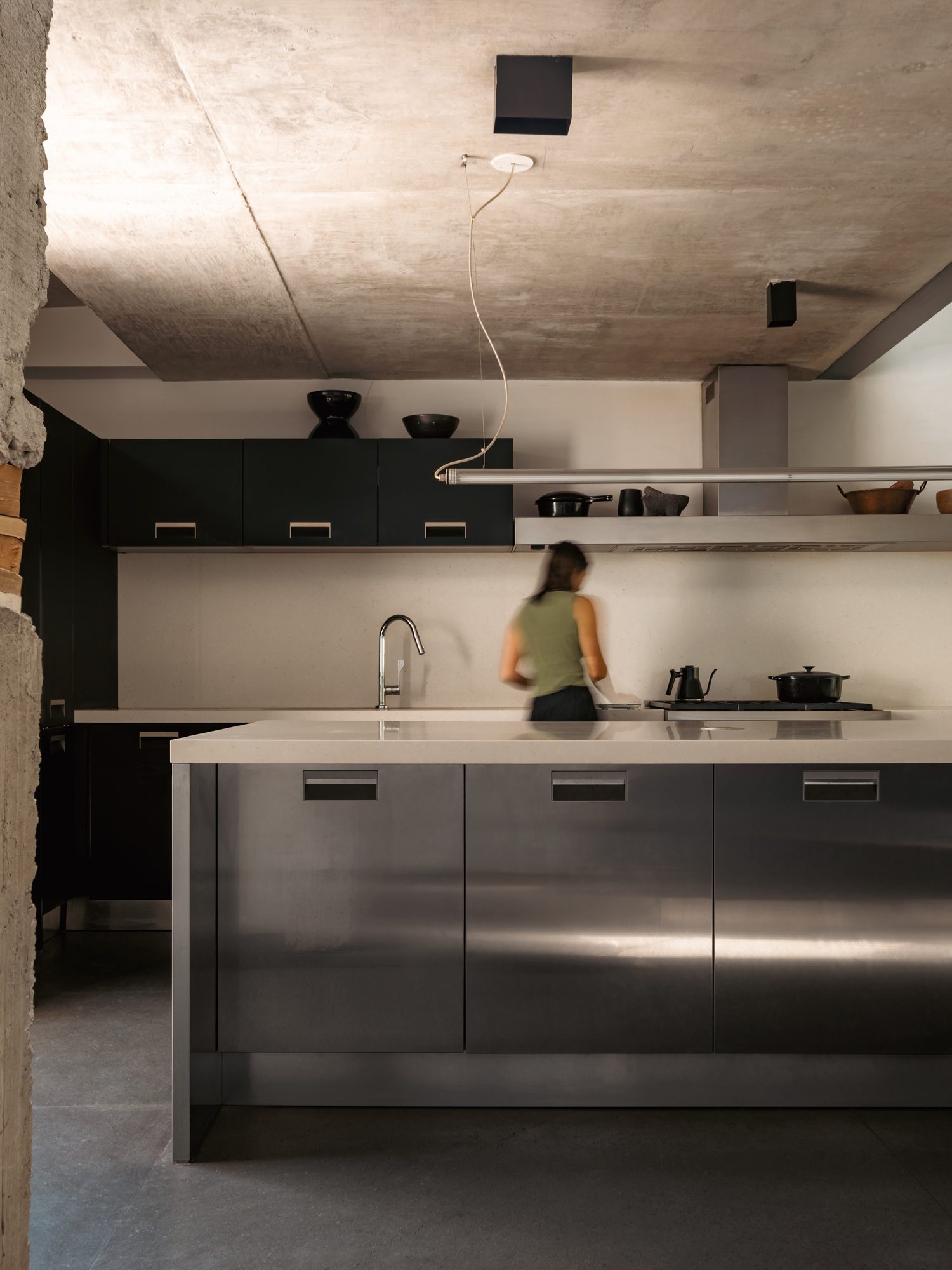
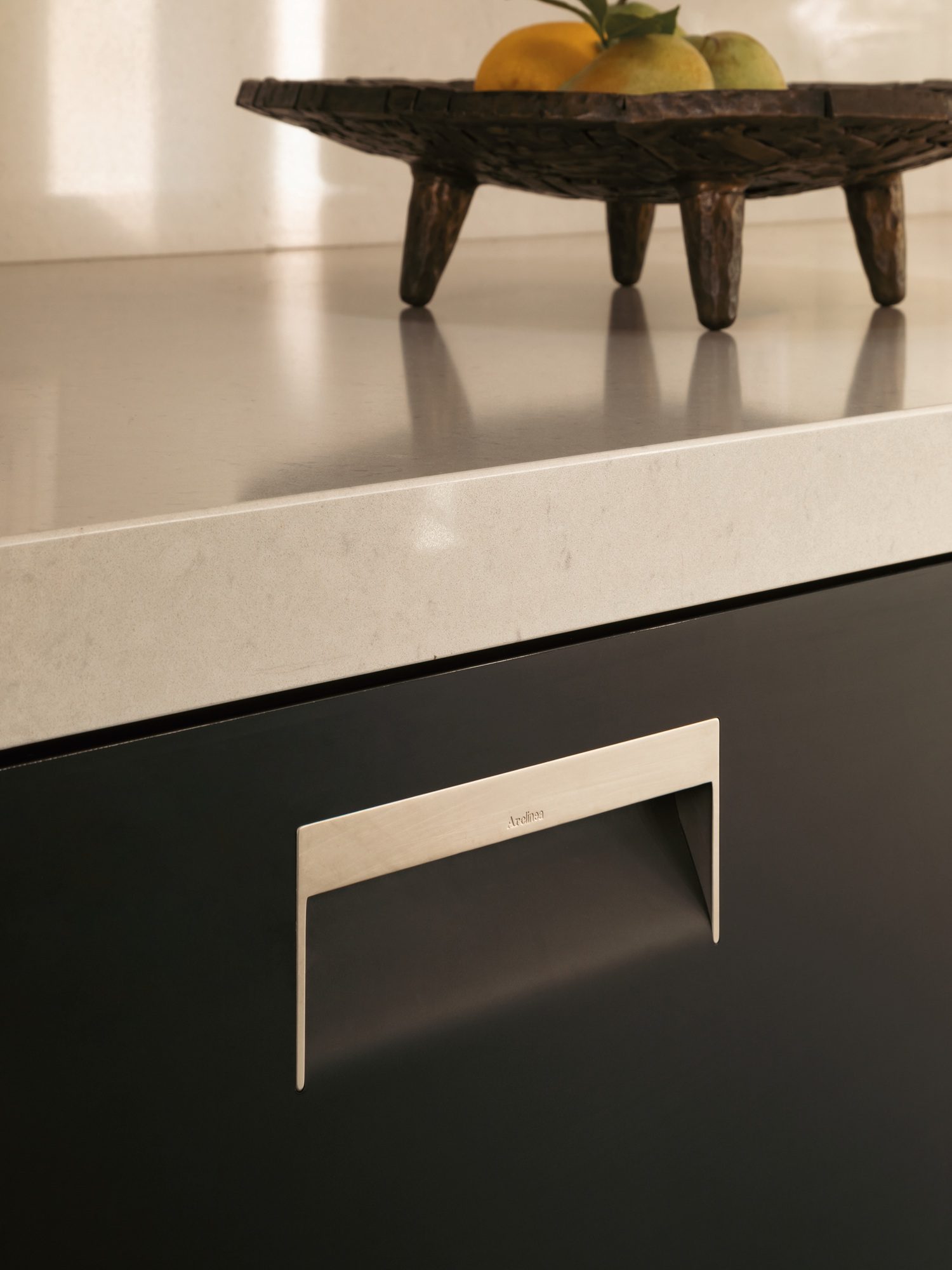
Into this context of humble materials, ennobled by an almost monastic artisanal treatment, the high-precision technology of Arclinea is inserted. The operational core is the Italia island. Designed by Antonio Citterio in 1988, Italia represents the historical watershed where the aesthetics of professional kitchens crossed the domestic threshold.
The space finds its center of gravity in this scenic monolith, a pure volume that celebrates the extensive use of stainless steel. The island is sculpted by the recessed Italia handle: a subtraction of material that carves the front, eliminating every superfluous protrusion for absolute formal cleanliness. The thick, robust worktop catches the natural light descending from above, creating reflections that make the steel vibrant and unexpectedly welcoming.
On the right wall, the narrative shifts, playing on contrast. A long operational line features base units that abandon integral metal to be clad in black Fenix, a nanotechnological material with a velvety touch. The dark doors absorb light, highlighting the worktop, which returns to stainless steel, interrupted only by the professional freestanding cooktop block. Capping it all, the Shelf Hood designs a horizontal line that integrates aspiration and defines an open support surface, emphasizing perspectival depth.
The layout follows a double-flow configuration that translates the distributive efficiency of professional kitchens into the domestic realm. To the left, a freestanding Fenix unit creates a soft volume that ensures containment without obstructing the visual connection to the stairs. At the center of this spatial choreography, the dining table with an acid-etched glass top acts as a transparent hinge: the meeting point between preparation and consumption, underscoring an architecture that, despite its technical precision, remains devoted to the convivial dimension of life.
Galileo 105 thus asserts itself as a laboratory of urban resilience, where the hardness of concrete protects the delicacy of domestic rituals. Here, the Italia kitchen demonstrates its timeless relevance: a classic from 1988 that, engaging in dialogue with Sánchez’s contemporary architecture, proves that true avant-garde lies in functional perfection that knows how to transcend time.
Photo: Leonardo Pelucchi